

A European Autumn?
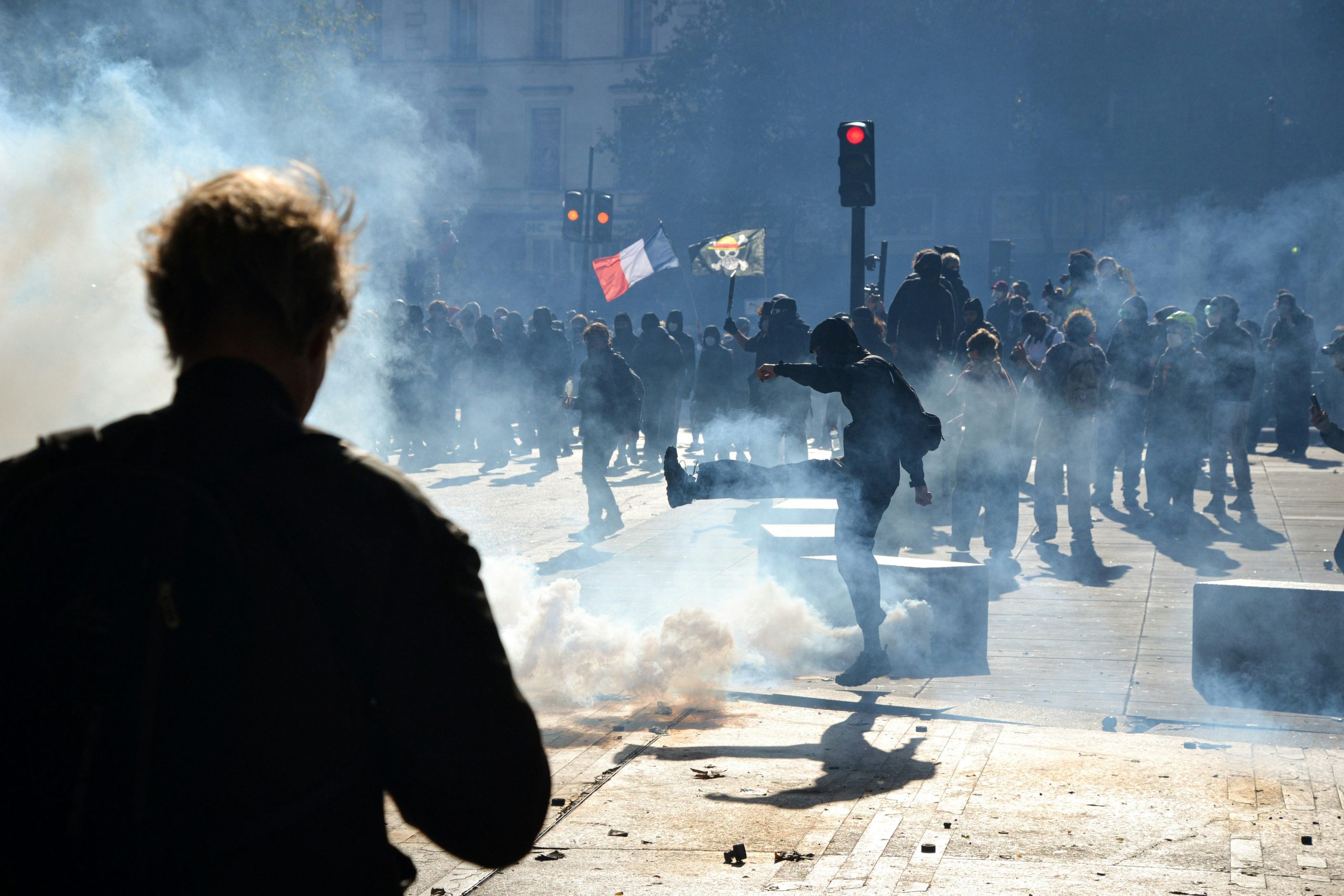
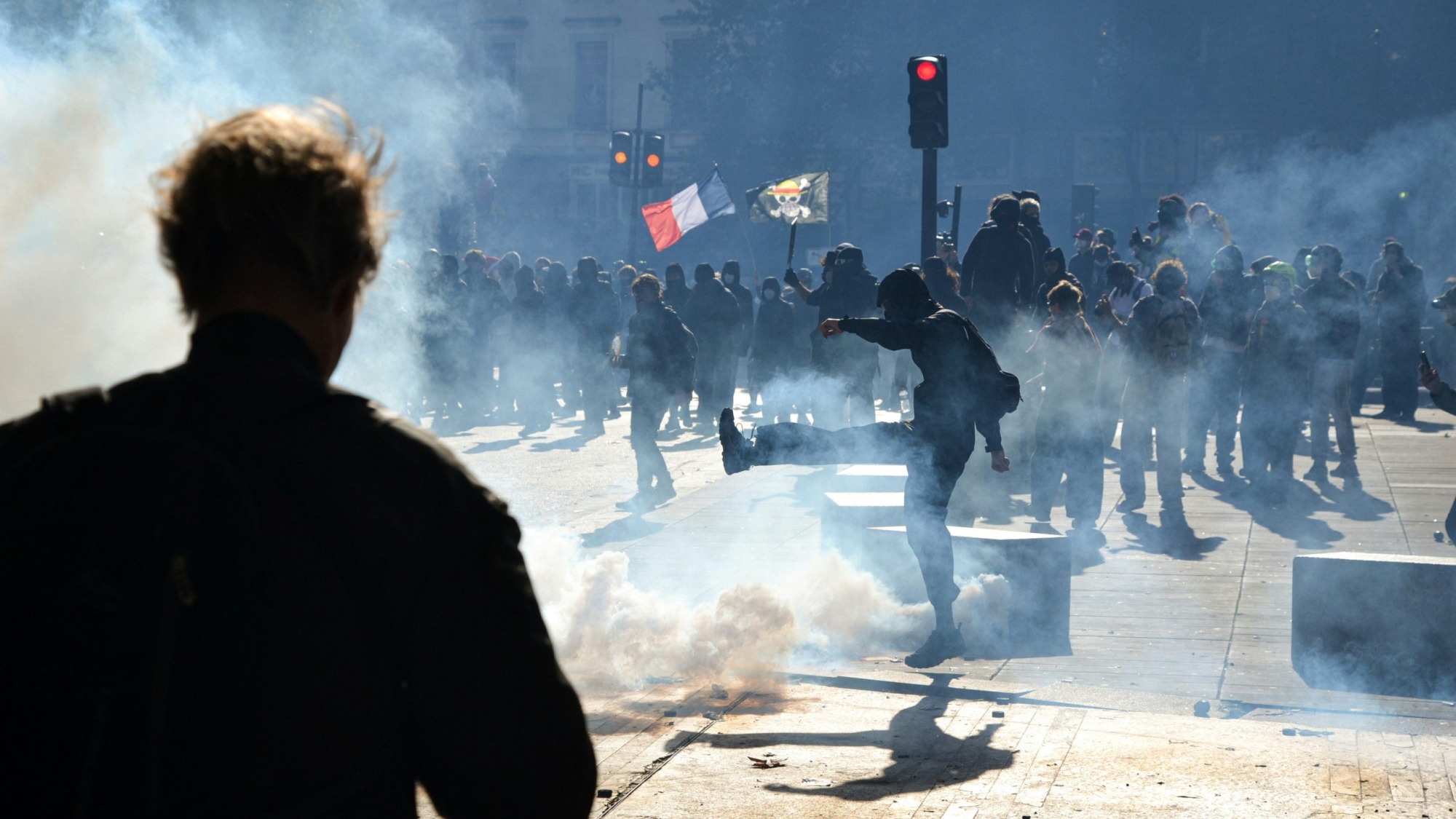
Photo of the French protests, Paris October 2026, by Pierre-Louis Mièze on Unsplash.
At the heart of many protests that have filled Europe’s streets since September is a question of what an ordinary and dignified life now costs. Half of the Europeans aged 16 to 26 polled in seven countries this spring expect to be worse off than their parents.i Young people in the EU name the cost of living first when asked what worries them most about their future.ii In several countries, government responses have included riot police, fast-track courts and rhetoric about extremism.iii When a day of French marches ended in looting in October, ministers blamed the ultra-left and the party La France Insoumise, though the Paris prosecutor said she could not confirm. Mediapart published an intelligence commissioner’s note saying that his service was being told to pin the movement on the party, falsely in the service’s own view.iv Beyond the immediate confrontation between protesters and authorities lies a deeper issue of how democratic societies respond when people’s expectations of a dignified life are increasingly frustrated.
Over the last three decades, living with dignity has become increasingly unaffordable for many people in Europe. The share of national income paid out in wages has been falling across the EU since the mid-1990s.v House prices are up 60 per cent since 2010 and rents 29.vi Eurozone wages bought almost two per cent less at the start of this year than five years earlier. In Italy the loss was six per cent, in Spain two. A French wage bought what it had bought in 2021.vii
Across successive crises, government responses have often placed a disproportionate share of the economic burden on people who live on their wages. After 2008, EU governments propped up their banks with €1.6 trillion and turned to austerity. EU and IMF rescue loans came on the condition that collective bargaining be weakened. In Greece, the share of workers covered by a collective agreement fell from 83 to 40 per cent.viii When energy prices exploded in 2022, the governor of the Bank of England, on £575,500 a year, asked British workers for “quite clear restraint”. Real wages in the rich G20 countries fell by 2.2 per cent in the first half of that year. By the IMF’s count, profits accounted for 45 per cent of the euro area’s price rises from early 2022 to early 2023 and labour costs for 25.ix For rearmament, governments have shown a greater willingness to mobilise resources. Chancellor Friedrich Merz promised the German military whatever money it needs to become Europe’s strongest conventional army, then told his party three months later that the welfare state could no longer be financed.x France’s draft budget for 2027 asks for savings of €54 billion. It holds state spending flat, defence and debt service excepted, and freezes civil servants’ pay and family allowances.xi Eighteen EU governments have had the Union’s deficit rules relaxed for defence and for no social spending of any kind.xii While resources have repeatedly been mobilised for bank bailouts and military spending, investment in schools, the climate transition and improvements in living standards has faced persistent constraints.xiii These choices reveal whose interests carry the greatest weight in determining economic priorities.
Squeezing people in this way can create fertile ground for the far right. Isabella Weber’s Anti-Fascist Economics traces how material insecurity, inflation, and austerity prepared the ground for fascism in Weimar Germany and are doing the same today. A study of more than 200 European elections found that each one per cent cut in public spending added about three points to the extreme parties’ vote.xiv The economic choices made by successive governments have helped create some of the conditions in which the far right has gained ground. What is called the cost-of-living crisis is an existential crisis for democracy.
For many people, it has become increasingly difficult to see a meaningful alternative to these economic policies at the ballot box. This sense of limited alternatives is reinforced when governments present their policies as inevitable, a stance German calls Alternativlosigkeit, though it has an earlier iteration in British Thatcherism. Liberals and social democrats still speak of social security and citizens’ rights, yet in government they have held wages down and budgets tight much as conservatives have.xv The far right mobilises around the rhetoric of an ethno-nationalist community of solidarity, yet some of their economic policy choices run counter to the material interests of the constituencies they claim to represent, offering no real relief or dignity. In the French parliament, Marine Le Pen’s deputies voted in 2022 against raising the minimum wage and against a rent freeze. In Spain, Vox helped to vote down this autumn’s protections for tenants.xvi Despite differences between political parties, many of the underlying economic assumptions shaping government policy have remained remarkably resistant to change. No party of government proposes an economy run for the common good and the people. In France, the president’s camp, which calls itself the centre, now polls behind both Jean-Luc Mélenchon and Marine Le Pen.xvii When people perceive that the available political choices cannot meaningfully alter the conditions of their lives, the search for alternatives can extend beyond electoral politics.
So people are in the streets. In France, it began in September with a strike at a secondary school outside Paris that was short of staff. Within weeks, pupils across the country were blockading their schools over classes of more than forty and buildings in disrepair; the yellow vests had returned, and on 5 November every major union struck beside them. The government counted 600,000 marchers that day and the unions more than 1.5 million.xviii The students ask for €10 billion for education. The government has offered €4 billion in loans for school buildings, 15,000 university places and 3,000 substitute teachers.xix In Spain, an 87-year-old woman was carried out of the Madrid flat she had lived in for more than seventy years after an investment fund bought it. She died the following month. The average rent for a home in Spain is €1,176 a month and the average young worker’s pay is €1,190. The events triggered camps and marches. And on 11 November the two large union federations and the tenants’ union held Spain’s first general strike in fourteen years, the first called mainly over housing.xx
Spain elects a parliament on 29 November and France a president in April. In Spain the Partido Popular and Vox, which voted the tenant protections down, could win a majority between them, and in France Marine Le Pen leads the polls ahead of Jean-Luc Mélenchon.xxi The protestors have something to gain from keeping the right out of office. In Serbia, the movement itself just stood for election, almost two years after it began. Students there began protesting after a station canopy in Novi Sad killed sixteen people in November 2024. They were beaten by police and by gangs working for the ruling party and saw almost none of their demands met. They kept opposition parties and NGOs at a distance to protect themselves from co-optation. On 25 October, their own list won 140 of 250 seats.xxiii Elsewhere in Europe, the future trajectories of these movements remain open.xxiii Alongside people mobilising independently, trade unions, student unions, tenants’ unions and the yellow vests call the days of action. Whether these mobilisations can contribute to sustained forms of organisation capable of exercising countervailing power in relation to employers and the state remains to be seen.
If the Automation and Repression model, published in June by Nobel Prize-winning economist Daron Acemoglu together with Arda Gitmez and Mehdi Shadmehr, holds, those in power will concede less and less. In the model, workers are readier to revolt as a greater share of national income goes to capital. Decisions to expand automation raise that share. A state acting in the interests of capital owners can either hold automation back, redistribute through taxes, or repress. As automation shrinks what labour earns, buying social peace through redistribution becomes increasingly expensive, while the cost of repression is a fixed share of output. A growing stock of capital sooner or later makes repression the cheaper answer. By the same logic, owners of capital come to support authoritarianism and the setting up of a repressive system.xxiv While the model is new, the relationship between full employment, wage growth and countervailing democratic power has long been demonstratedxxv and is also part of Weber’s analysis in Anti-Fascist Economics.
According to the CIVICUS Monitor, the share of people in Europe and Central Asia living in countries with open or narrowed civic space fell from 58.3 per cent in 2019 to just 26.5 per cent in 2025, mainly because of crackdowns on protests and human rights defenders in some of Europe’s largest democracies. In 2025 alone, EU members France, Germany and Italy dropped from narrowed to obstructed, Switzerland fell from open to narrowed, and Georgia and Serbia slid to repressed.xxvi Over the past decade, governments have bought surveillance technology from private firms and extended police competencies. In Germany, Hesse has searched its police databases with Palantir’s software since 2017. Bavaria, North Rhine-Westphalia and Baden-Württemberg have since bought it. France has extended the algorithmic video surveillance first tried at the 2024 Olympics until 2030, Britain is raising its police vans with live facial recognition from ten to fifty, and Italy’s intelligence services used spyware from the Israeli firm Paragon against activists who rescue migrants at sea.xxvii These developments have emerged in different national contexts and have been justified on different grounds, including terrorism, serious crime, gang violence, knife crime and the Olympic Games. Other measures are aimed at protest itself. Hungary allows facial recognition to identify those who attend a banned Pride march, Italy punishes road blockades during protests with up to two years in prison, and British police have arrested more than 4,000 people, according to campaigners, for showing support for the activist group Palestine Action, which was proscribed under anti-terror legislation.xxviii The concern is not only how states respond to particular protests, but how the expanding legal and technological capacity for surveillance and repression may reshape the conditions under which people can organise, dissent and exercise collective power.
Against this backdrop, several European states are expanding their military capabilities and asking a younger generation to shoulder greater responsibilities for national defence. Croatia has brought back conscription this year, Denmark now drafts women, France is recruiting for a new voluntary military service, and Germany makes every eighteen-year-old man register.xxix Yet these developments are happening at a time when many young people question whether existing political and economic institutions adequately protect their interests and give them a meaningful stake in the future. In a seven-country survey this spring, only 35 per cent of those aged 16 to 26 thought it likely that they would take part in defending their country if it were attacked.xxx In France, the share of men under 35 who say they are ready to enlist if war comes fell from 65 to 45 per cent between May 2024 and November 2025, and 61 per cent of Germans under 30 reject conscription.xxxi Half of Britons aged 16 to 29 told the UK Youth Poll they would take up arms under no circumstances. Eddie Barnes, who directs the centre behind that poll, put their responses like this: “Why fight for a country that isn’t fighting for you?”xxxii These tensions invite us to reconsider what constitutes security, whose security is prioritised, and how democratic legitimacy shapes people’s willingness to defend the societies in which they live.
References
i TUI Stiftung, Young Europe 2026 (YouGov; 8,024 people aged 16 to 26 in Germany, France, Spain, Italy, Greece, Poland and the United Kingdom; 24 April to 21 May 2026), p. 16, https://www.tui-stiftung.de/wp-content/uploads/2026/07/2026-ENG-Youth-Study.pdf. Asked about income and quality of life, 52 per cent expect their generation to be worse off than their parents’ and 25 per cent better off. The share expecting to be worse off is 66 per cent in the United Kingdom, 62 in Spain, 60 in Italy, 59 in Greece, 52 in France, 47 in Germany and 28 in Poland.
ii Eurobarometer, “EU challenges and priorities: young Europeans’ views”, March 2025, https://europa.eu/eurobarometer/surveys/detail/3373: 41 per cent of young people in the EU name the cost of living among their worries for the future, ahead of peace and global stability (30 per cent) and economic stability (27 per cent); housing affordability stands at 23 per cent.
iii France: about 2,700 people were detained and 217 jailed after fast-track trials in the five days after 17 October; half of the 217 had no criminal record, by the justice minister’s count (Agence France-Presse, “France hands out swift verdicts in fast-track justice after riots”, 22 October 2026, as carried by Courthouse News, https://www.courthousenews.com/france-hands-out-swift-verdicts-in-fast-track-justice-after-riots/). Demonstrations were banned in Lyon and Marseille and a partial curfew imposed in Paris (“Macron to meet student groups: Where are France’s protests heading?”, Al Jazeera, 23 October 2026, https://www.aljazeera.com/news/2026/10/23/we-want-promises-backed-by-results). Four United Nations experts criticised the force used against student protests on 28 October (Hanna Duggal, “Mapping how France’s protest wave spread across Europe”, Al Jazeera, 8 November 2026, https://aljazeera.com/news/2026/11/8/mapping-how-frances-protest-wave-spread-across-europe). Spain: police cleared the camp on Madrid’s Puerta del Sol on 3 November, removing 334 people (“Why are Europe’s governments struggling to respond to growing protests?”, Al Jazeera, 4 November 2026, https://aljazeera.com/news/2026/11/4/why-are-europes-governments-struggling-to-respond-to-growing-protests), and used pepper spray and rubber bullets during the general strike of 11 November (“Tens of thousands march for affordable housing and higher wages in Spain’s first general strike in 14 years”, Spain in English, 11 November 2026, https://www.spainenglish.com/2026/11/11/tens-of-thousands-march-for-affordable-housing-and-higher-wages-after-spains-first-general-strike-in-14-years/). Italy: violent participation in a protest has been made punishable by up to five years in prison (Al Jazeera, 4 November 2026, as above). On the talk of extremists in France see the next note.
iv Mediapart, 19 October 2026, as reported in “LFI : les 3 révélations de Mediapart qui ébranlent le renseignement”, armees.com, 21 October 2026, https://armees.com/renseignement-territorial-ordres-gouvernement-2026/, and in the Anadolu report “France : des services de renseignement auraient reçu des consignes pour imputer les violences à LFI, selon Mediapart”, carried by impact.sn, 20 October 2026, https://www.impact.sn/France-des-services-de-renseignement-auraient-recu-des-consignes-pour-imputer-les-violences-a-LFI-selon-Mediapart_a59445.html. The interior ministry denies having given such an instruction.
x Ricardo Barradas, “Financialization and Neoliberalism and the Fall in the Labor Share: A Panel Data Econometric Analysis for the European Union Countries”, Review of Radical Political Economics 51(3), 2019, p. 385, on 27 EU countries between 1995 and 2013. European Trade Union Confederation, Macroeconomic Outlook 2025, https://www.etuc.org/sites/default/files/publication/file/2025-12/ETUC%20MACROECONOMIC%20OUTLOOK%202025%20web.pdf, using the European Commission’s AMECO data: labour’s share of income in the EU-27 has stood at about 63 per cent since the crisis of 2008, roughly 1.5 points below its average in the 1990s.
xi Eurostat, “Ongoing rise: house prices and rents climb further”, 3 October 2025, https://ec.europa.eu/eurostat/web/products-eurostat-news/w/ddn-20251003-1: between 2010 and the second quarter of 2025 house prices in the EU rose by 60.5 per cent and rents by 28.8 per cent. House prices more than tripled in Hungary and Estonia, and rents rose in 26 of the 27 member states.
vii OECD, Employment Outlook 2026, as reported in “Real wages are still below 2021 levels in a third of European countries analysed”, Euronews, July 2026, carried by Yahoo Finance, https://sg.finance.yahoo.com/news/real-wages-still-below-2021-044800782.html. Real wages in the first quarter of 2026 compared with the first quarter of 2021: eurozone down 1.8 per cent, Italy down 6.1, Czechia down 5.8, Sweden down 4.8, Denmark down 2.1, Spain down 2.0, France up 0.1, Germany up 0.9, the United Kingdom up 3.6. Real wages fell in nine of the 27 European countries covered.
viii European Commission, press release IP/11/1487, 1 December 2011, as recorded by European Sources Online, https://www.europeansources.info/?p=454661: banks in the EU took up about €1.6 trillion of state support between October 2008 and December 2010, equal to 13 per cent of GDP, most of it in guarantees and liquidity. Ian Cunningham and Philip James, “Trends in Collective Bargaining, Wage Stagnation and Income Inequality under Austerity”, in Donna Baines and Ian Cunningham (eds), Working in the Context of Austerity (Bristol: Bristol University Press, 2021), p. 74: financial assistance to Cyprus, Greece, Hungary, Ireland, Latvia and Portugal was made conditional on reforms of collective bargaining; between 2000 and 2015 coverage fell from 83 to 40 per cent in Greece, from 98 to 35 in Romania and from 84 to 75 in Portugal. On average, real wages fell in each year from 2008 to 2016 in Greece, Portugal, the United Kingdom and Italy (Table 4.1, p. 86).
ix Imad A. Moosa, The Cost of Living Crisis: Implications for Economic Theory and Public Policy (Cheltenham: Edward Elgar, 2024), p. 79 on Andrew Bailey and his salary, and p. 80 for the International Labour Organization’s finding that real wages in the advanced G20 countries fell by 2.2 per cent in the first half of 2022. Niels-Jakob Hansen, Frederik Toscani and Jing Zhou, “Europe’s Inflation Outlook Depends on How Corporate Profits Absorb Wage Gains”, IMF Blog, June 2023, https://content.govdelivery.com/accounts/USIMF/bulletins/3620a0d: of the euro area’s price rises since the start of 2022, profits accounted for 45 per cent, import costs for about 40 and labour costs for 25. For Germany, where the government asked the unions for wage restraint and real wages fell by more than in any year since 1945: Isabella M. Weber, Antifaschistische Wirtschaftspolitik (Berlin: Suhrkamp, 2026), the German edition of Anti-Fascist Economics (London: Allen Lane, 2026), pp. 192 and 194.
x Deutscher Bundestag, report on the government statement of 14 May 2025, https://www.bundestag.de/1064956; “Merz will mit SPD über Sozialstaat streiten”, ZDF heute, 23 August 2025, https://www.zdfheute.de/politik/deutschland/merz-cdu-spd-debatte-sozialstaat-100.html, on his speech to the Christian Democrats’ party conference in Lower Saxony.
xi “Le budget pour l’Etat « le plus rigoureux depuis très longtemps » : Sébastien Lecornu propose un effort de 54 milliards d’euros”, Public Sénat, 17 September 2026, https://www.publicsenat.fr/actualites/politique/budget-2027-sebastien-lecornu-propose-un-effort-de-54-milliards-deuros (state spending frozen apart from debt service and defence; civil servants’ pay point frozen); “Budget 2027 : ce qu’il faut retenir des mesures annoncées par le gouvernement Lecornu”, Toute l’Europe, October 2026, https://www.touteleurope.eu/economie-et-social/budget-2027-ce-qu-il-faut-retenir-des-mesures-annoncees-par-le-gouvernement-lecornu/ (family allowances held at their 2026 level).
xii “Spain authorised to activate Stability and Growth Pact flexibility to increase its military spending”, Agence Europe, 12 June 2026, https://agenceurope.eu/en/bulletin/article/13887/14/spain-authorised-to-activate-stability-and-growth-pact-flexibility-to-increase-its-military-spending, which counts Spain as the eighteenth member state. The clause allows a government to exceed the EU’s deficit limits by up to 1.5 per cent of GDP a year for defence spending between 2025 and 2028: Eurostat, “EU economic governance framework indicators”, https://ec.europa.eu/eurostat/statistics-explained/SEPDF/cache/142321.pdf.
xiii Executive pay in the United Kingdom: High Pay Centre, “Gap between the pay of FTSE 100 CEOs and UK workers the widest for 8 years”, July 2026, https://highpaycentre.org/gap-between-the-pay-of-ftse-100-ceos-and-uk-workers-the-widest-for-8-years/. The median chief executive of a FTSE 100 company received £5.06 million in 2025/26, 130 times the pay of the median full-time worker.
xiv Weber, Antifaschistische Wirtschaftspolitik, p. 301, and p. 119 on Britain after 2010. Ricardo Duque Gabriel, Mathias Klein and Ana Sofia Pessoa, “The Political Costs of Austerity”, Sveriges Riksbank Working Paper 418, November 2022, https://swopec.hhs.se/rbnkwp/abs/rbnkwp0418.htm, summarised by the authors in “Austerity benefits the extremes”, SUERF Policy Brief, https://www.suerf.org/suerf-policy-brief/62081/austerity-benefits-the-extremes. The study covers 124 regions in eight European countries and more than 200 regional, national and European elections between 1980 and 2015. A one per cent cut in regional public spending raised the combined vote of far-left and far-right parties by about three percentage points, with the far right gaining slightly more.
xv Spain: the Socialist government of José Luis Rodríguez Zapatero cut public-sector pay by five per cent in 2010, froze it for 2011 and suspended the automatic rise in pensions (“Spain Under Pressure from Europe Unveils Drastic Cuts to Contain Budget Crisis”, MercoPress, 12 May 2010, https://en.mercopress.com/2010/05/12/spain-under-pressure-from-europe-unveils-drastic-cuts-to-contain-budget-crisis). France: the Socialist government under President François Hollande set out €50 billion of spending cuts for 2015 to 2017 and kept civil servants’ pay frozen (Gouvernement, “Plan d’économies : les mesures détaillées”, 2014, https://www.info.gouv.fr/plan-d-economies-les-mesures-detaillees). United Kingdom: the Labour government announced cuts to disability benefits worth more than £5 billion a year by 2030 (Agence France-Presse, 18 March 2025, as carried by EWN, https://ewn.co.za/2025/03/18/uk-govt-cruelly-cuts-disability-payments-amid-tight-finances), a month after cutting the aid budget to pay for defence (“Starmer slashes aid to fund biggest increase in defence spending since Cold War”, PA, 25 February 2025, as carried by the Express & Star, https://www.expressandstar.com/uk-news/2025/02/25/starmer-slashes-aid-to-fund-biggest-increase-in-defence-spending-since-cold-war). Netherlands: the Labour Party (PvdA) governed with the liberal VVD from 2012 to 2017 on a coalition agreement containing about €16 billion of cuts and tax rises (Parlement.com, “Cijfers kabinet-Rutte II (2012-2017)”, https://parlement.com/cijfers-kabinet-rutte-ii-2012-2017) and lost 29 of its 38 seats in 2017 (Friedrich-Ebert-Stiftung, “Strategy debates of Dutch political parties in 2017”, https://www.fes.de/strategy-debates-global/strategy-debates-netherlands). Denmark: a coalition led by the Social Democrat Mette Frederiksen abolished a public holiday in 2023 to raise money for defence (“Denmark to scrap public holiday to help meet NATO spending goal”, CNBC, 1 March 2023, https://www.cnbc.com/2023/03/01/denmark-to-scrap-public-holiday-to-help-meet-nato-spending-goal.html). Germany: the coalition of Social Democrats and Greens under Chancellor Gerhard Schröder passed the four Hartz laws, which took effect between January 2003 and January 2005. They loosened the rules on temporary and other non-standard work, and a large number of low-wage jobs topped up from public funds followed (Niels van Doorn, “Stepping Stone or Dead End?”, in Baines and Cunningham (eds), Working in the Context of Austerity, p. 55). They opened the way to local deals that departed from the national industry agreements (Cunningham and James, “Trends in Collective Bargaining”, p. 76) and replaced unemployment assistance with a basic welfare benefit (Landeszentrale für politische Bildung Baden-Württemberg, “Rückblick: Arbeitslosengeld II und Hartz IV”, https://www.lpb-bw.de/hartz-iv). Schröder told the World Economic Forum in Davos on 28 January 2005, “We have built a functioning low-wage sector” (our translation; quoted in Christoph Butterwegge, “Das etwas andere Jobwunder”, der Freitag 44/2015, https://www.freitag.de/autoren/christoph-butterwegge/das-etwas-andere-jobwunder). In March 2025 Christian Democrats, Social Democrats and Greens voted together to exempt defence spending from the debt brake (Bundeszentrale für politische Bildung, “Grundgesetzänderung für Verteidigung und Sondervermögen”, 28 March 2025, https://www.bpb.de/kurz-knapp/hintergrund-aktuell/560839/grundgesetzaenderung-fuer-verteidigung-und-sondervermoegen/).
xvi France: “La loi pouvoir d’achat votée : « Mieux vaut les miettes que la disette », réagit la députée RN Laure Lavalette”, franceinfo, July 2022, https://www.franceinfo.fr/economie/pouvoir-achat/la-loi-pouvoir-d-achat-votee-mieux-vaut-les-miettes-que-la-disette-reagit-la-deputee-rn-laure-lavalette_5271631.html: the Rassemblement National’s deputies rejected an amendment raising the minimum wage to €1,500 and opposed a rent freeze. Spain: “El Congreso tumba a Sánchez los decretos de vivienda y aviva la idea del adelanto electoral”, The Objective, 2 October 2026, https://theobjective.com/espana/politica/2026-10-02/congreso-sanchez-decretos-vivienda-elecciones/: the two decrees, one protecting vulnerable tenants against eviction and one renewing leases automatically, fell on 2 October, the first by 178 votes to 172, with the Partido Popular, Vox and Junts voting against. On 12 November the standing committee of Congress approved a new version of the first decree and again rejected the second: “El Congreso convalida el decreto de vivienda, pero deroga el de la prórroga de los alquileres”, Finect, https://www.finect.com/usuario/eduardogarcia/articulos/el-congreso-convalida-el-decreto-de-vivienda-y-deroga-el-de-los-alquileres.
xvii “Sondage présidentielle 2027 : la moyenne de tous les instituts”, L’Hémicycle, 12 November 2026, https://lhemicycle.com/2026/11/12/sondage-presidentielle-2027/, averaging the latest first-round poll of each of seven institutes: Marine Le Pen 34.1 per cent, Jean-Luc Mélenchon 16.8, Édouard Philippe 13.6, Raphaël Glucksmann 12.6, Gabriel Attal 4.7. In the Ipsos poll of October 2026 Philippe trails Mélenchon in every scenario tested: “Présidentielle 2027 : Mélenchon progresse, Le Pen reste en tête”, https://www.ipsos.com/fr-fr/presidentielle-2027-melenchon-progresse-le-pen-reste-en-tete.
xviii “France strikes: largest day of protests in years as economy fuels unrest”, CNN, 5 November 2026, https://www.cnn.com/2026/11/05/world/live-news/france-strikes-protests-action-schools-intl (the first strike at a school in the Paris suburbs; the strike of 5 November called by all the main unions); Al Jazeera, 23 October 2026, https://www.aljazeera.com/news/2026/10/23/we-want-promises-backed-by-results (teacher shortages, classes of more than 40, dilapidated buildings); “Gilets jaunes, retraités, syndicats : quelles nouvelles manifestations sont prévues en novembre ?”, Zinfos974, 11 November 2026, https://www.zinfos974.com/gilets-jaunes-retraites-syndicats-quelles-nouvelles-manifestations-sont-prevues-en-novembre/ (the yellow vests resumed on 17 October); “Hundreds of thousands march in nationwide strike in France as government backs austerity budget”, Euronews, 5 November 2026, https://www.euronews.com/2026/11/05/france-braces-for-nationwide-strike-as-government-backs-austerity-budget-to-rein-in-soarin (about 600,000 marchers according to the authorities, more than 1.5 million according to the unions).
xix Euronews, 5 November 2026, https://www.euronews.com/2026/11/05/france-braces-for-nationwide-strike-as-government-backs-austerity-budget-to-rein-in-soarin: student unions demand €10 billion for schools; on 26 October the government announced €4 billion in low-interest loans for school renovation and 15,000 more university places for 2027 to 2028; the students’ union says 10,000 places were cut this year. Al Jazeera, 23 October 2026, https://www.aljazeera.com/news/2026/10/23/we-want-promises-backed-by-results: 3,000 more substitute teachers, and €1.1 billion more for national education in the 2027 budget.
xx “Spain braces for nationwide strike as anger over housing, costs boils over”, Al Jazeera, 10 November 2026, https://www.aljazeera.com/news/2026/11/10/spain-braces-for-nationwide-walkout-as-anger-over-housing-costs-boils-over: the eviction of Maricarmen Abascal, 87; an average rent of €1,176 a month; average pay of €1,190 for young workers, a figure from the Spanish Youth Council. Spain in English, 11 November 2026, https://www.spainenglish.com/2026/11/11/tens-of-thousands-march-for-affordable-housing-and-higher-wages-after-spains-first-general-strike-in-14-years/: her death in October; a strike called for by housing campaigners and held by the CCOO and UGT federations with the Sindicato de Inquilinas. The tenants’ union counted four million strikers and the employers’ federations put participation below five per cent. Associated Press, 11 November 2026, as carried by NPR, https://www.npr.org/2026/11/11/nx-s1-6037314/spain-general-strike: the first general strike in Spain driven mainly by housing.
xxi Spain: “General strikes to paralyze Spain as protestors clash with police ahead of election campaign”, CNBC, 11 November 2026, https://www.cnbc.com/2026/11/11/spain-protests-general-strikes-election.html (polls suggest that the Partido Popular and Vox could win a majority). The average of polls kept by elDiario.es puts the two parties at 195 of the 350 seats, with 176 needed for a majority, and shows the Socialists gaining (“La media de encuestas en el arranque de la campaña: el PSOE crece, pero la derecha mantiene una amplia ventaja”, 13 November 2026, https://eldiario.es/politica/media-encuestas-arranque-campana-psoe-crece-derecha-mantiene-amplia-ventaja_1_13660672.html). The pre-election survey of the state’s Centro de Investigaciones Sociológicas, with 45,074 interviews between 7 and 30 October, puts the Socialists first and the two parties of the right at 171 seats at most (“CIS preelectoral: PP y Vox se quedan en 171 escaños y Sánchez podría revalidar”, Moncloa.com, 12 November 2026, https://www.moncloa.com/2026/11/12/cis-pp-vox-171-escanos-3466732). Al Jazeera, 10 November 2026, https://www.aljazeera.com/news/2026/11/10/spain-braces-for-nationwide-walkout-as-anger-over-housing-costs-boils-over (Vox would be the first far-right party in a national government since the end of the Franco dictatorship). France: polling average of 12 November 2026, https://lhemicycle.com/2026/11/12/sondage-presidentielle-2027/ (first round: Le Pen 34.1 per cent, Mélenchon 16.8).
xxii Vladimir Simović, “From Grief to Resistance”, transform!europe, 1 November 2025, https://transform-network.net/blog/analysis/from-grief-to-resistance-one-year-on-how-students-sustained-serbias-broadest-protest-movement/ (attacks on students, detentions, demands unmet); Centre for Eastern Studies (OSW), “Protests in Serbia: the government and its opponents close ranks”, 2 March 2026, https://www.osw.waw.pl/en/publikacje/analyses/2026-03-02/protests-serbia-government-and-its-opponents-close-ranks (violence by uniformed services and pro-government groups in summer 2025; the refusal of a joint list with opposition parties); “How Student Protesters Spurned Serbia’s ‘Demonised’ Civil Society”, Balkan Insight, 30 December 2025, https://balkaninsight.com/2025/12/30/how-student-protesters-spurned-serbias-demonised-civil-society/bi/ (the refusal of NGOs); the election of 25 October 2026 (“What next for Serbia’s election winners?”, RTÉ, 1 November 2026, https://www.rte.ie/news/2026/1101/1597425-serbia-politics/); final results as reported by N1, 5 November 2026, https://n1info.rs/english/news/election-commission-announces-final-results-of-parliamentary-elections/.
xxiii France: Zinfos974, 11 November 2026, https://www.zinfos974.com/gilets-jaunes-retraites-syndicats-quelles-nouvelles-manifestations-sont-prevues-en-novembre/ (yellow-vest marches called for 14 and 21 November, a public-sector strike for 17 November, no further joint strike day of the main union confederations confirmed). Spain: Spain in English, 11 November 2026, https://www.spainenglish.com/2026/11/11/tens-of-thousands-march-for-affordable-housing-and-higher-wages-after-spains-first-general-strike-in-14-years/ (the tenants’ union says it will keep up the pressure whoever governs after the election).
xxiv Daron Acemoglu, A. Arda Gitmez and Mehdi Shadmehr, “Automation and Repression”, NBER Working Paper 35336, June 2026, https://www.nber.org/papers/w35336. Pages of the authors’ version of 5 June 2026: abstract and pp. 2 to 4 for the argument, pp. 37 to 38 for democracy, pp. 38 to 39 for the conclusion. The paper is a model and contains no data. A successful revolt in it expropriates capital for good. The authors call their main result a “complementarity between automation and repression” (p. 3). The result on democracy holds when a democratic government is able to tax capital heavily enough (p. 38). The authors themselves write of a coup against democracy (abstract and p. 38).
xxv John Kenneth Galbraith, American Capitalism: The Concept of Countervailing Power (Boston: Houghton Mifflin, 1952): pp. 121 to 122 on trade unions as the countervailing power of workers against large corporations, p. 142 on the state’s support for that power through the Wagner Act and minimum wages, and pp. 137 to 139 on its limit, since under strong demand employers and unions pass wage rises on in prices. Hartmut Elsenhans, “Einbettende Strukturen oder steigende Masseneinkommen als Ursache von Wachstum durch Marktwirtschaft”, in Roland Czada and Susanne Lütz (eds), Die politische Konstitution von Märkten (Wiesbaden: Westdeutscher Verlag, 2000), pp. 73 to 88: p. 79 on rising real wages as a condition of capitalist growth, p. 80 on labour becoming scarce, wages rising and labour and capital giving each other bargaining power, with democratisation depending on whether the bourgeoisie needs labour’s political support, p. 83 on universal suffrage and the freedom to organise as won by labour, and p. 87 on the need to embed capitalism in the bargaining power of labour. Hartmut Elsenhans, Capitalism, Development and Empowerment of Labour: A Heterodox Political Economy (Abingdon: Routledge, 2022): p. 2 on democracy as the setting in which capital and labour negotiate, pp. 31 to 32 and 48 on wages rising in every branch once labour is scarce, p. 55 on formal democracy as an instrument of labour’s negotiating power, p. 169 on job losses weakening that power, and p. 215 on the countervailing power of labour, without which capitalists turn into rentiers.
xxvi CIVICUS Monitor, People Power Under Attack 2025 (December 2025), https://monitor.civicus.org/globalfindings_2025/europeandcentralasia/: p. 71 for the share of the region’s population living in countries rated open or narrowed and for the downgrading of France, Germany and Italy, p. 73 for Georgia, Serbia and Switzerland. The Monitor rates civic space in each country as open, narrowed, obstructed, repressed or closed. Georgia and Serbia had been rated obstructed.
xxvii Germany: “Bundesregierung will KI-Einsatz der Polizei”, Digitalrechte, May 2026, https://digitalrechte.de/news/bundesregierung-will-ki-einsatz-der-polizei-kommt-jetzt-palantir (HessenDATA in Hesse since 2017; Bavaria and North Rhine-Westphalia use the same software; Baden-Württemberg signed a framework contract before its parliament passed the legal basis in November 2025). The Federal Constitutional Court found the legal basis for automated data analysis in Hesse and Hamburg unconstitutional on 16 February 2023 (1 BvR 1547/19, 1 BvR 2634/20, https://www.bundesverfassungsgericht.de/SharedDocs/Entscheidungen/DE/2023/02/rs20230216_1bvr154719.html). Bills before the Bundestag would allow the Federal Criminal Police Office and the federal police to run automated data analysis and to match faces against images on the internet (Drucksachen 21/6131 and 21/6132, 26 May 2026, https://dserver.bundestag.de/btd/21/061/2106132.pdf). On 13 November 2026 the Bundestag gave the foreign and domestic intelligence services powers to hack, to analyse data with artificial intelligence, to match biometric data against the internet and to enter homes in secret (ZDF heute, 13 November 2026, https://zdfheute.de/politik/deutschland/nachrichtendienst-reform-bundestag-bnd-gesetz-100.html). Knife-ban zones: § 42c of the Weapons Act, in force since 31 October 2024, lets the states authorise random checks without suspicion (Senate of Bremen, regulation of 22 November 2024. France: Law no. 2026-798 of 18 August 2026 (“Ripost”), article 50, extends algorithmic video surveillance to 31 December 2030 and to buildings open to the public; the law also eases the use of police drones and lets private security guards test body cameras (“Vidéoprotection algorithmique : ce que change la loi Ripost”, Leto, https://www.leto.legal/news/loi-ripost-videoprotection-algorithmique-2030-conseil-constitutionnel-2026; https://www.decodeur-ia.com/articles/ia-securite-privee-loi-ripost-camera-pieton-vsa-antivol-magasins-2026/). The interior ministry’s programming law of 24 January 2023 added €15 billion for 2023 to 2027 and tripled the funds that co-finance municipal video surveillance (Vie publique, https://www.vie-publique.fr/loi/284424-loi-24-janvier-2023-securite-lopmi-programmation-ministere-interieur). United Kingdom: Home Office white paper of 26 January 2026, as reported in “Home Office announces sweeping police technology plans”, Computer Weekly, https://www.computerweekly.com/news/366638196/Home-Office-announces-sweeping-police-technology-plans (live facial recognition vans from 10 to 50; £115 million over three years for artificial intelligence in policing). The Ministry of Defence gave Palantir a £240 million contract without competition in December 2025, and NHS England had given it a £330 million contract in November 2023 (TechRadar, https://www.techradar.com/pro/security/palantir-to-continue-uk-ministry-of-defense-work-in-new-three-year-deal-gbp240-million-data-analytics-contract-awarded-without-procurement). Italy: report of the parliamentary intelligence committee COPASIR of 5 June 2025, as reported by TechCrunch, https://techcrunch.com/?p=3016156. Sweden: amendment to the Police Act passed on 10 April 2024 by 151 votes to 148 (Law Library of Congress, https://www.loc.gov/item/global-legal-monitor/2024-05-01/sweden-parliament-approves-law-allowing-for-temporary-safety-zones/); Denmark has used such zones since 2004. Further cases: in Greece 87 people, among them ministers, the leader of the opposition and journalists, were targeted with the Predator spyware, one in three of them while also under surveillance by the national intelligence service, and an Athens court convicted four people linked to the vendor Intellexa on 26 February 2026 (“Four convicted over spyware scandal that shook Greece”, https://www.yahoo.com/news/articles/four-convicted-over-spyware-scandal-150558339.html). The European Commission’s internal security strategy ProtectEU of 1 April 2025 proposes doubling Europol’s staff, turning it into an operational police agency and preparing law enforcement access to encrypted data (Agence Europe, https://agenceurope.eu/en/bulletin/article/13612/13/european-commission-presents-internal-security-strategy-for-the-eu-adapted-to-new-types-of-threats).
xxviii Hungary: amendment to the law on assembly passed on 18 March 2025 (Associated Press, as carried by PBS NewsHour, https://www.pbs.org/newshour/world/hungary-passes-anti-lgbtq-law-banning-pride-events). Italy: decree-law 48/2025, passed into law on 4 June 2025, with 14 new offences; a road blockade by more than one person carries six months to two years (“The security decree is law”, Unione Sarda, https://www.unionesarda.it/en/italy/the-security-decree-is-law-from-the-ban-on-light-cannabis-to-the-crime-of-blocking-the-road-what-does-it-provide-u5p8m00r; https://highlycapitalized.com/?p=33722). United Kingdom: Palestine Action was proscribed under the Terrorism Act in July 2025. The campaign Defend Our Juries counted more than 4,000 arrests by 31 October 2026 (“Over 4,000 arrested under Palestine Action ban”, Breakthrough News, 2 November 2026, https://breakthroughnews.org/2026/11/02/over-4000-arrested-under-palestine-action-ban/); the Metropolitan Police reported 325 arrests on that day, 320 of them for expressing support for a proscribed organisation (The New Arab, 1 November 2026, https://www.newarab.com/news/uk-police-say-325-people-were-arrested-palestine-action-demo). Spain: the public security law of 2015, still in force under governments that promised to reform it, produced 40,205 fines for disrespect or disobedience towards officers in 2024 (“Un 15% más de sanciones y 29 millones más de recaudación”, Público, https://www.publico.es/politica/15-sanciones-29-millones-recaudacion-balance-ley-mordaza-2024.html). The same pattern across 21 countries: Amnesty International, Under-Protected and Over-Restricted: The State of the Right to Protest in 21 European Countries, July 2024, https://www.amnesty.org/en/documents/eur01/8199/2024/en/.
xxix “Defence: Which European countries have mandatory and voluntary military service?”, Euronews, 27 April 2026, https://www.euronews.com/2026/04/27/defence-which-european-countries-have-mandatory-and-voluntary-military-service (ten EU states with conscription; Croatia’s first intake in March 2026; German men must register at 18 and answer a questionnaire); “Threat of war: Which countries in Europe have military service?”, The Local, 27 November 2025, https://www.thelocal.com/20251127/threat-of-war-which-countries-in-europe-have-military-service (Denmark: service lengthened to eleven months and compulsory for women since 1 July 2025; France: a ten-month voluntary military service from summer 2026).
xxx TUI Stiftung, Young Europe 2026, p. 60, https://www.tui-stiftung.de/wp-content/uploads/2026/07/2026-ENG-Youth-Study.pdf. Share answering that they would be very or somewhat likely to take part personally in military defence: 35 per cent across the seven countries (men 45, women 23); Poland 41, France 40 (men 52, women 27), Greece 37, Germany 36, Spain 31 (men 45, women 16), the United Kingdom 29 (men 41, women 16), Italy 28.
xxxi France: Odoxa and Backbone Consulting asked the same question for Le Figaro twice, whether respondents could enlist in the army in case of war. On 2 and 3 May 2024, 49 per cent of 1,005 adults said yes for the defence of France: 62 per cent of men and 38 per cent of women, 58 per cent of those aged 18 to 24 against 46 to 48 per cent of those over 35, and 65 per cent of men aged 18 to 34 (Les Français, les élections européennes et la journée de l’UE, slide “Engagement potentiel pour défendre la France et l’Europe”, https://www.odoxa.fr/wp-content/uploads/2024/05/Odoxa_BackboneConsulting_Le-Figaro-Les-Francais-les-elections-europeennes-et-la-journee-de-lUE.pdf). On 26 and 27 November 2025, 42 per cent of 1,005 adults and 45 per cent of men aged 18 to 34 said yes, falls of 7 and 20 points (Les Français et le service militaire, pp. 17 and 18; summary at https://www.odoxa.fr/sondage/8-francais-sur-10-approuvent-le-nouveau-service-militaire-annonce-par-emmanuel-macron/). Odoxa’s president, Gaël Sliman, puts the fall down to the remark by General Fabien Mandon, the chief of the defence staff, that the French must be ready to see their children die. In 2025 readiness stood at 64 per cent among supporters of Renaissance, the president’s party, and at 35 per cent among supporters of the left. Men aged 18 to 34 are a small part of each sample, and Odoxa’s own table puts the margin of error at seven to ten points for groups of 100 to 200 respondents, so the size of the fall is less certain than its direction. A survey of 18-to-25-year-olds by Anne Muxel had found 57 per cent of them, and 70 per cent of the young men, ready to enlist if war came to France (Les jeunes et la guerre, IRSEM Étude 116, https://www.irsem.fr/storage/file_manager_files/2025/03/etude-116-muxel-les-jeunes-et-la-guerre.pdf). Spain: the available series cover adults only. The surveys of the Centro de Investigaciones Sociológicas asked who would take part voluntarily in defending the country if it were attacked. In 1997 to 1999, 54 per cent of those who gave an answer said certainly or probably yes (men 61 per cent, women 48), which is about half of all those asked: Narciso Michavila, “¿Existe conciencia de defensa en España?”, Table 5, https://www.ugr.es/~ceas/Sociedad%20y%20seguridad/2.pdf. In 2013 and again in 2017 the share was 39 per cent, with 40 per cent answering certainly not (CIS study 2998, September 2013, and study 3188, September 2017, question 8, https://www.cis.es/documents/d/cis/es3188marpdf). WIN/Gallup International found 21 per cent of Spaniards and 29 per cent of the French willing to fight for their country at the end of 2014 (https://www.gallup.com.pk/bb_old_site/Polls/180315.pdf). Gallup International’s survey at the end of 2023 found 29 per cent in Spain, with 53 per cent unwilling, no figure for France (https://www.gallup-international.com/fileadmin/user_upload/surveys_and_news/2024/Fewer_people_are_willing_to_fight_for_their_country_compared_to_ten_years_ago/Fighting_for_the_country.pdf). In October 2026 about 30 per cent of Spaniards said they would volunteer if Ceuta and Melilla were attacked, 20 per cent among those under 30 (Winston barometer for Artículo 14, as reported by COPE, 12 October 2026, https://www.cope.es/programas/herrera-en-cope/noticias/preguntamos-espanoles-ceuta-melilla-sufriesen-ataque-integridad-territorial-participarian-voluntariamente-defensa-militar-cerca-30-dijo-20261012_3454076.html). Forsa for Redaktionsnetzwerk Deutschland, July 2025, as reported in Der Tagesspiegel, 4 August 2025, https://www.tagesspiegel.de/politik/umfrage-zur-verteidigungspolitik-mehrheit-der-deutschen-befurwortet-wehrpflicht–doch-nur-16-prozent-wurden-kampfen-14127767.html. Asked whether they would fight themselves, 56 per cent of Germans under 30 and 68 per cent of those over 60 said no.
xxxii John Smith Centre, University of Glasgow, UK Youth Poll 2026 (2,000 respondents aged 16 to 29), https://www.gla.ac.uk/news/archiveofnews/2026/april/headline_1262888_en.html: 50 per cent would take up arms under no circumstances; Eddie Barnes is the centre’s director. For Germany: Forsa for Redaktionsnetzwerk Deutschland, July 2025, as reported in Der Tagesspiegel, 4 August 2025, https://www.tagesspiegel.de/politik/umfrage-zur-verteidigungspolitik-mehrheit-der-deutschen-befurwortet-wehrpflicht–doch-nur-16-prozent-wurden-kampfen-14127767.html: 61 per cent of those under 30 reject conscription.