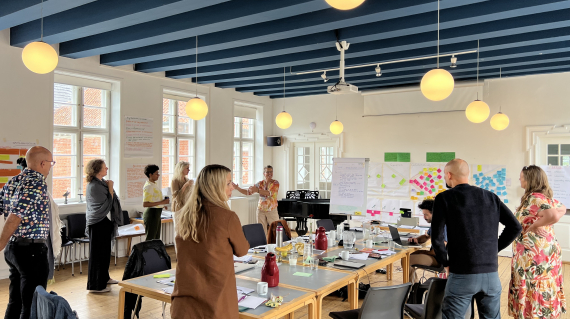
Photo courtesy of DPPA and the Dialogue organising team.

Reflections from the CSO-UN Dialogue on Peacebuilding 2025

The big question is of course whether an annual meeting like the CSO-UN Dialogue is able to create space for meaningful exchange, learning, and listening to the critically important input and recommendations from civil society across the globe. The Dialogue matters, convening an incredibly diverse set of leaders, experts and practitioners from around the world, but its value depends on what happens after the room clears

Invitation CSO-UN Dialogue Online Preparatory Exchange Stretching What’s Possible Civil Society Shaping a More Transformative Multilateralism for Peace and Human Right

Stretching What’s Possible: Civil Society Shaping a More Transformative Multilateralism for Peace and Human Rights

Conducive Space for Peace convened a virtual exchange on December 3rd, 2025, ahead of the 2025 CSO–UN Dialogue on Peacebuilding in Geneva. The exchange drew interest from seventy registered Dialogue participants and other civil-society actors from Africa, Asia, the Middle East, Europe and the Americas interested in how civic actors and multilateral institutions can work together in new ways. This note is a summary of the insights that emerged through short provocations and group discussions, including areas of challenges, uncertainties and questions that that merit continued exploration as enter the Dialogue.

Globegraphic2

Invitation: Informal Online Exchange Ahead of CSO-UN Dialogue

Civic space continues to narrow worldwide, even as UN human rights and peacebuilding architectures struggle to offer adequate protection and support. At the same time, global cooperation is fragmenting, demanding new forms of collaboration with civil society to uphold legitimacy and deliver on core mandates. The 2025 CSO-UN Dialogue takes place at a pivotal moment, with UN reform efforts advancing amid growing volatility and new pressures on multilateralism. Civil society remains a vital force for peace and inclusion, yet faces unprecedented challenges in resourcing, trust, and access.

Add a heading

Turning Possibility Into Practice: How the RESPACE Scenarios Are Helping Reimagine Collaboration for Peace

The world is at a crossroads. Rising conflict, inequality and climate injustice are testing our collective imagination, while systems meant to foster cooperation are often gridlocked by polarisation and inertia. Yet cracks in the system also create space for alternatives. Across the world, communities and civic actors are proving that new forms of solidarity and collaboration are possible.

Mie_photo

We, the ‘Benevolent Helpers’

There is much to criticise about Trump Jr.’s trip to Nuuk in January. A great deal, in fact, not least in relation to the stated desire of the U.S. to control Kalaallit Nunaat/Greenland and the unreasonable pressure placed on Naalakkersuisut (the Greenlandic government) in this regard. However, one positive outcome emerged. It was said loudly – so loudly that the Danish government and population could not avoid hearing it – that Inuit/Greenlanders are subjected to prejudice and racism, and that there is no equity in the Danish-Greenlandic relationship.

20251017_100740243

Lightning Talk at Peace Connect 2025

At the recent Peace Connect gathering in Nairobi, CSP’s Director Sweta Velpillay shared a reflection on what it means to reclaim our civic power and reimagine the systems that shape peace and democracy. Drawing on experiences from across global civil society, she spoke about how courage and creativity are abundant, but too often fragmented and disconnected.

CS 1 Publication (9)

Publication Launch Recap: The Power of Civil Society

On September 17, Conducive Space for Peace (CSP) virtually launched the publication Civil Society as the Possibility for Collective Freedom. The launch featured Inés M. Pousadela, Senior Research Advisor at CIVICUS, Jesse Eaves, Senior Director for the Peacebuilding team at Humanity United, and Ralph Ellermann, Senior Programme Manager from Conducive Space for Peace, together with more than 35 participants from around the world.